论文精读笔记:Rethinking Correspondence-based Category-Level Object Pose Estimation
1. 核心判断
- 论文:CVF Open Access
- 关键问题:类别级两阶段 pipeline 往往只优化 NOCS / correspondence regression,忽略 descriptor 是否能区分 shape、是否对 pose 稳定,以及错误对应会如何破坏最后的 pose fitting。
- 核心回答:用 shape-sensitive、pose-invariant feature 提高 correspondence quality,并将 outlier correspondence removal 作为 pose fitting 前的显式阶段。
2. 一句话定位
SpotPose 的贡献是一次范式诊断:类别级 correspondence 不等于“预测一张坐标图”,还必须控制 feature 的不变性 / 判别性与几何拟合的 outlier 鲁棒性。
2.1 论文图表导读
| 图表 | 应该看什么 |
|---|
| Figure 1 | 对应质量差与 outlier 进入 fitting 后,pose error 为什么会非线性放大。 |
| Figure 2 | dense feature、descriptor、outlier removal 与 pose fitting 的完整流程。 |
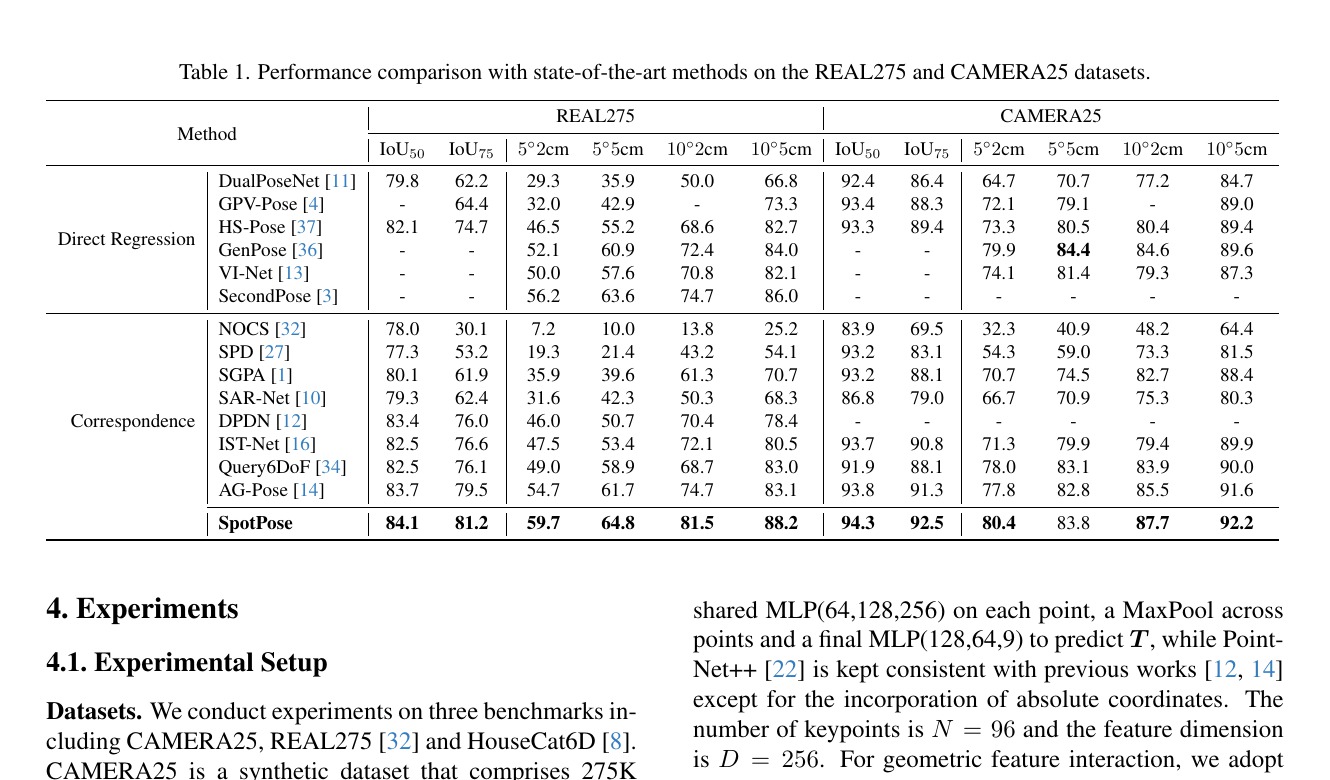
| Table 1–2 | REAL275、CAMERA25、HouseCat6D 的 prior 与数据模态不同。 |
| Table 3–7 | point backbone、geometric descriptor、feature interaction、outlier strategies 各自作用。 |
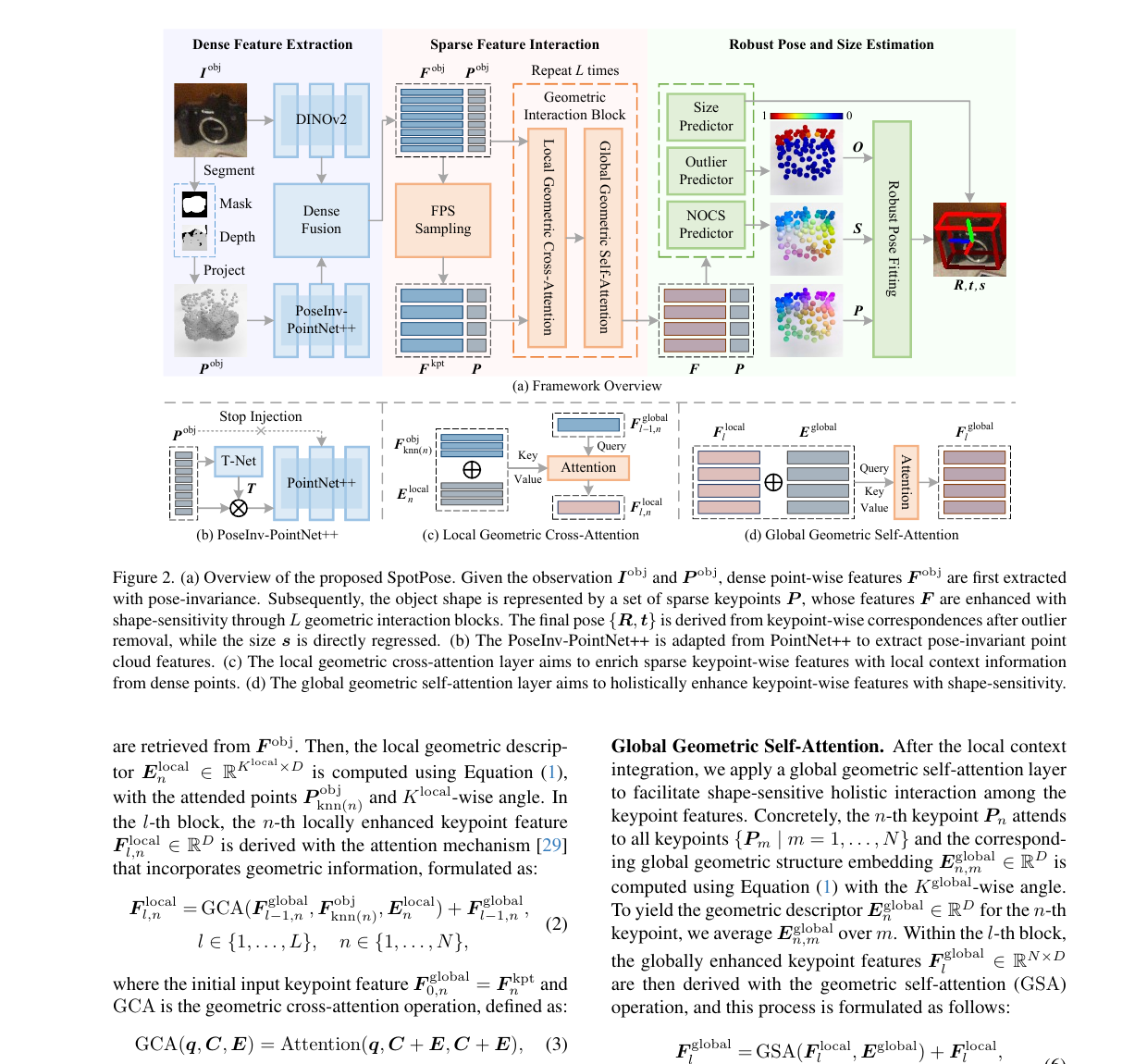 原论文方法图区域:SpotPose 先学习对 shape 敏感且对 pose 稳定的特征,再清除异常 correspondence 后执行 pose fitting。来源:CVF Open Access。图片版权归论文作者及出版方所有,本站仅作论文解读展示。
3. 问题设定与边界
- 输入是 object RGB-D / point cloud,输出类别级未知实例的 pose 与 size;通常以 NOCS-like correspondences 配合 similarity fitting。
- 它是类别内泛化,不处理没有训练类别先验的任意新类别。
- outlier removal 不能修复完全不正确的 object mask、深度尺度或 category assignment。
4. 方法详解
- Feature extraction:从观测点云提取 dense point-wise feature,兼顾局部几何和全局形状。
- Descriptor design:利用 pose-invariant geometry 让同形结构可匹配,同时保持 shape-sensitive discrimination,避免把不同实例表面混为一谈。
- Outlier-aware prediction:给 correspondence 评分 / 筛除,再执行 pose fitting,降低少量错误点对刚体 / scale transform 的影响。
5. 实验分析
| 数据集 / 指标 | AG-Pose | SpotPose | 增益 |
|---|
| REAL275 5°2cm | 54.7 | 59.7 | +5.0 |
| REAL275 10°5cm | 83.1 | 88.2 | +5.1 |
| CAMERA25 5°2cm | 77.8 | 80.4 | +2.6 |
| HouseCat6D 5°2cm | 11.5 | 23.8 | +12.3 |
| HouseCat6D IoU50 | 62.5 | 77.0 | +14.5 |
HouseCat6D 的增幅远大于 CAMERA25,符合论文机制:真实杂乱场景的形状变化、遮挡与深度异常更多,pose-invariant descriptor 和 outlier removal 才有更大发挥空间。反过来,这也意味着不能仅凭 CAMERA25 的高绝对分数判断真实部署效果。
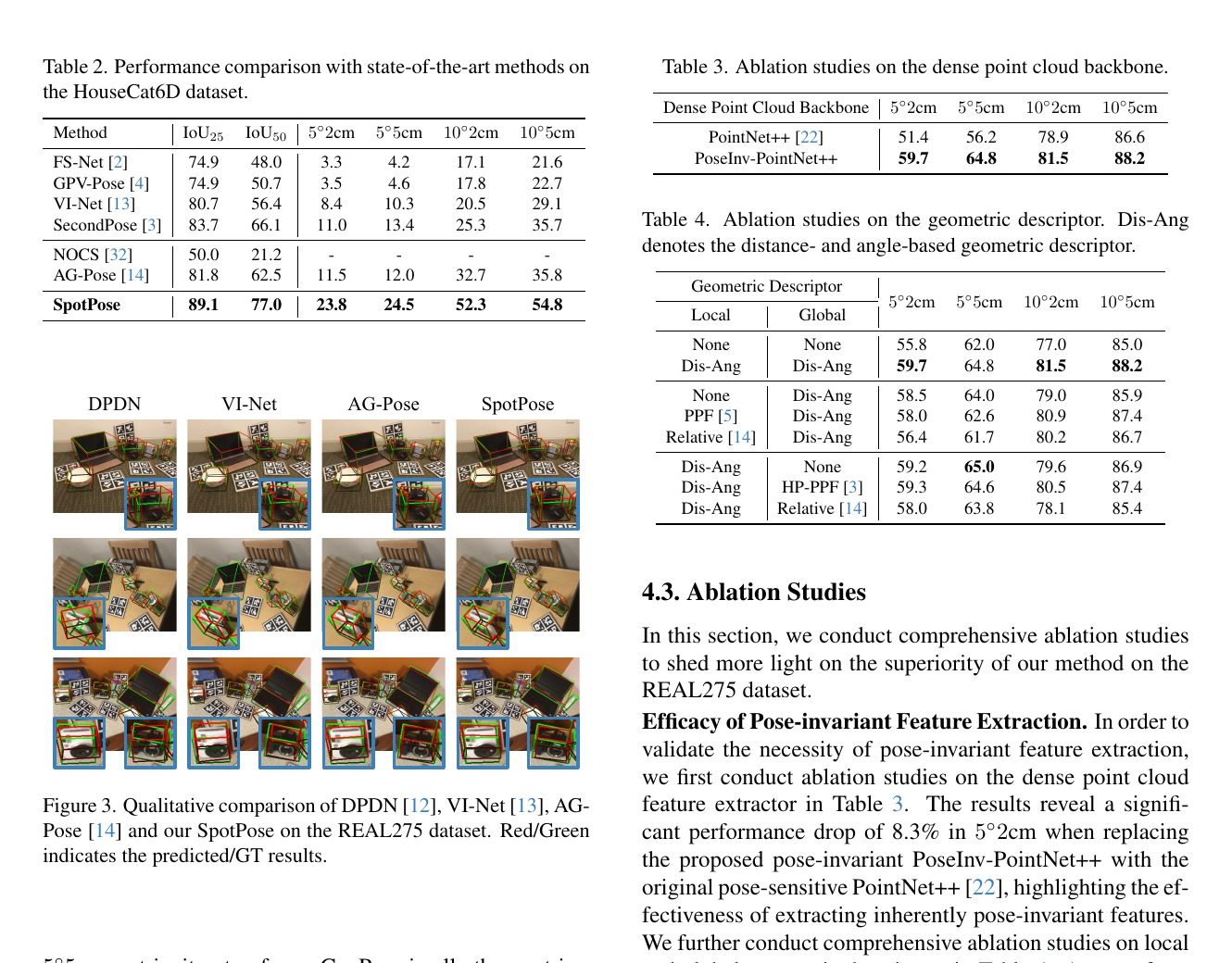 原论文 Table 2–4 与 Figure 3:HouseCat6D 主结果、DPDN / VI-Net / AG-Pose / SpotPose 定性比较,以及 point backbone 和局部–全局几何描述子的逐项消融。来源:CVPR 2025 论文 PDF。图片版权归论文作者及出版方所有,本站仅作论文解读展示。
- 将 PointNet++ 换成 PoseInv backbone,REAL275 的 5°2cm / 5°5cm 从 51.4 / 56.2 提至 59.7 / 64.8,表明 pose-invariant feature 不是命名层面的贡献。
- 无局部 / 全局描述子的 5°2cm 为 55.8;同时使用局部与全局 Dis-Ang descriptor 达到 59.7。局部模式辨别邻域结构,全局模式抑制跨实例形变歧义,两者互补。
- feature interaction 从无交互的 47.7 / 55.1 提升到 local 与 global 都使用 attention 时的 59.7 / 64.8;交互块数从 0 增至 6 持续受益,但 8 块回落到 57.9,说明更深并不单调更好。
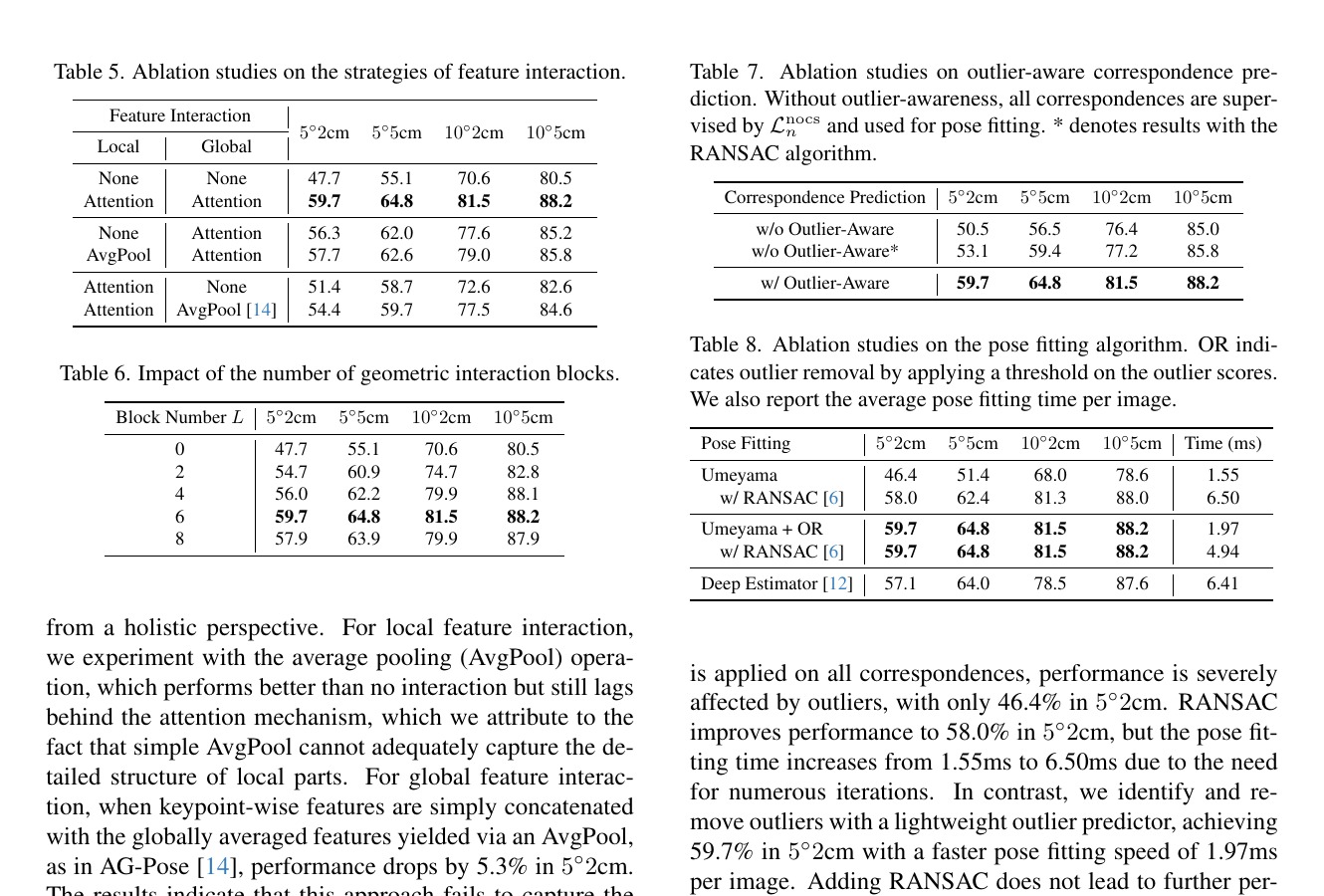 原论文 Table 5–8:验证 local / global attention、交互块数、outlier-aware correspondence prediction 与不同 pose fitting 方案;学习式异常剔除在更低耗时下达到最佳精度。来源:CVPR 2025 论文 PDF。图片版权归论文作者及出版方所有,本站仅作论文解读展示。
最关键的 solver 对照是:Umeyama 仅 46.4(1.55 ms),RANSAC 为 58.0(6.50 ms),Umeyama + learned outlier removal 为 59.7(1.97 ms),再加 RANSAC 仍是 59.7(4.94 ms)。因此性能提升不能归因于测试时使用了更昂贵 solver;相反,模型把鲁棒性前移到了 correspondence 质量控制。
6. 作者声称与我的判断
| 作者声称 | 我的判断 |
|---|
| pose-invariant 且 shape-sensitive 特征是关键 | backbone 带来 5°2cm 的 51.4→59.7、完整描述子带来 55.8→59.7,构成直接支持;仍需按对称物与可见比例分组。 |
| outlier removal 改善 fitting | Umeyama + removal 的 59.7 高于 RANSAC 的 58.0 且耗时更低,证据充分;跨数据集阈值校准仍需报告。 |
7. 复现要点与限制
- 固定 point sampling、normal / RGB preprocessing、NOCS convention、fitting solver 和 outlier threshold。
- 深度噪声和重遮挡会同时损害 feature 与 outlier confidence,存在双重失败。
- 若下游要求实时性,必须报告 dense correspondence、筛选与 RANSAC / solver 的总时间。